
GUEST POST: Getting Paid (Negotiating Your Fee as a Headlining Comedian)
“Money makes the world go round, the world go round, the world go round.” - Jonathan van Halem


Jonathan van Halem is a Brooklyn-based stand-up comedian. His writing has been featured in ClickHole and McSweeney’s. He’s worked as an opener for Rory Scovel, Gianmarco Soresi, and Sabrina Wu. He also has a Substack called Jonathan van Halem’s Substack, where he writes about stand-up comedy. He is perpetually on tour.
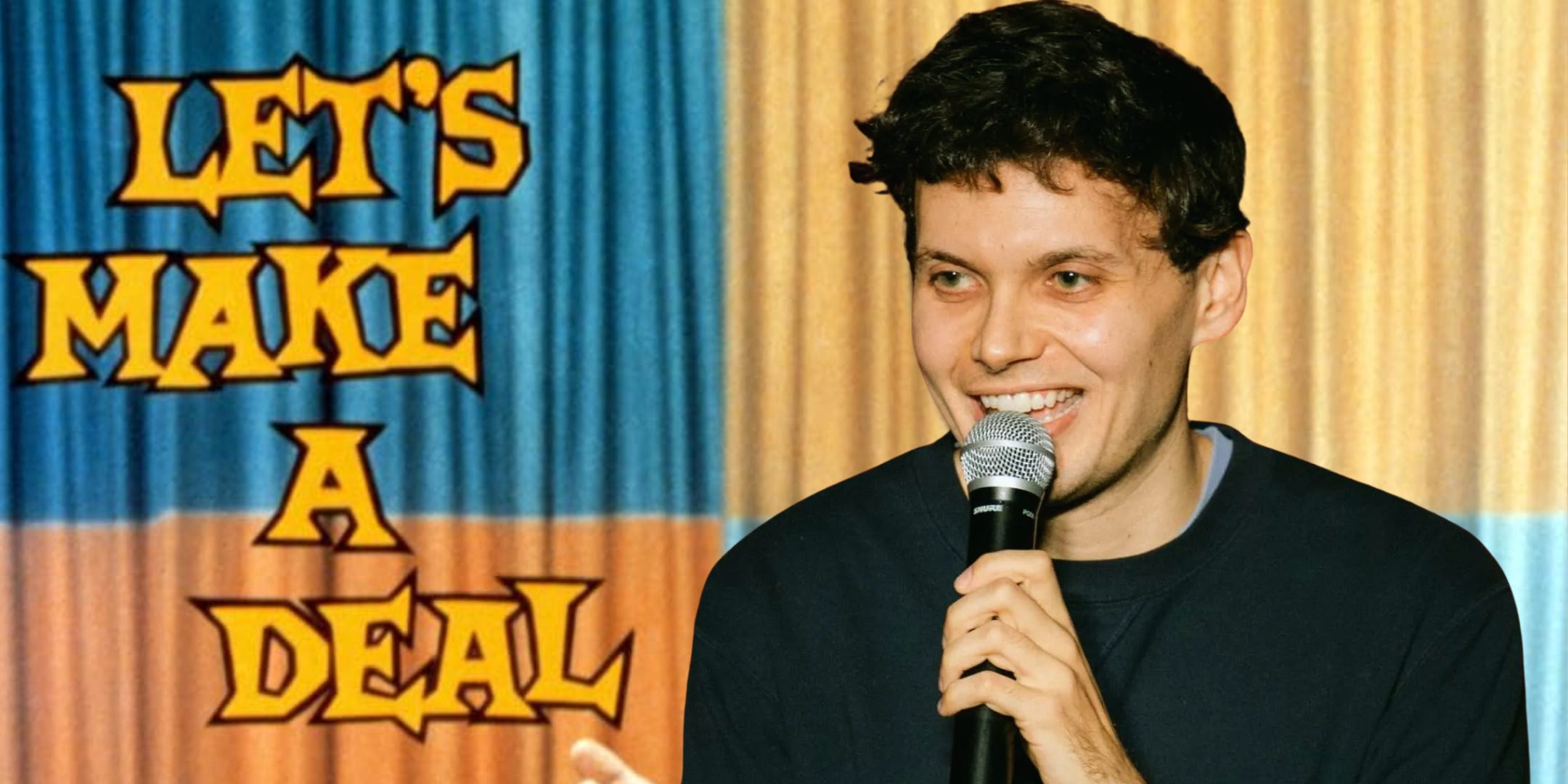
One of the less talked about aspects of stand-up comedy1 is that on top of being an artist, you’re also a small business owner, and part of being a small business owner is making the balance sheet work in your favor.
Making a living performing live stand-up comedy is hard, particularly early on. When you don’t have a proven track record of selling tickets, you have little leverage when you’re negotiating with comedy clubs. Oh, you don’t want to headline for an all-in offer of some paltry fee? Fine, there are a dozen comedians who will take the bad deal!
But just because you don’t have a ton of leverage doesn’t mean you have to get shafted. I’ve developed a couple of tactics that have helped me increase my take home pay over the past year as an out-of-town headlining comedian. And I will share them with you, because I am an advocate for the proletariat.
First, let’s go over the different types of pay structures.
Guaranteed Rate
Ah, a guaranteed rate — the crown jewel of compensation structures. This is exactly what it sounds like — a rate of payment that is guaranteed, regardless of ticket sales, bar sales, or any other possible outside factor. I’m going to be real with you — the only time I ever get a guaranteed rate is when I perform at a college (rightfully so, it’s the only reason anyone would ever travel to certain towns). Comedians get a guaranteed rate for corporate shows, as well.
Not much to say here — if you get offered a fair guaranteed rate2, take it!
Door Deal
A door deal is when you get paid a percentage of the gross box office receipts (typically referred to as the GBOR). Typically your percentage will only kick in after the venue has recouped their house fees. For the venues I have played, these expenses can range anywhere from $250 to $1,000 (yikes). This pays for the front of house staff, sound tech, and (allegedly) for marketing the show.
So let’s say you’re playing a 100 seat venue. A not crazy door deal would be the Artist (you) getting 70% of the GBOR after $400 in house fees. So if tickets are $20, the total GBOR is $2,000. After house fees, that leaves $1,600. 70% of that is $1,120.
Not a bad take home pay! But bear in mind, this structure only becomes lucrative if you’re able to sell a good amount of tickets. Under the same deal, 50 tickets sold only nets you a little over $400. And 50 tickets sold is nothing to sneeze at. 25 tickets sold? You make a cool $70 😎.
Door deals are the most frequent pay structure I’m offered, which makes sense, because the artist pay is prioritized last. You (usually) don’t get any percentage of the bar or the kitchen, and you don’t get your cut of the GBOR until the venue has taken care of itself.
But if you have no leverage (AKA precedent for ticket sales in that area), that’s what’s going to be offered to you. Your best bet is to take the door deal, sell the dang venue out, and return to the negotiating table next year with an increased amount of leverage.

Base Rate + Bonus Deal
A Base Rate + Bonus Deal is getting a base payment plus a bonus at a certain amount of tickets sold. For the sake of consistency, let’s use the same example as above. If you’re playing a 100 seat venue, a not crazy Base Rate + Bonus Deal would be a base payment of $600, plus a bonus of $400 at 90 tickets sold.
What’s nice about this deal is obviously the base rate. I know $600 isn’t really a number to get that excited about, but it’ll do if you have a date open in your schedule and are able to route the show with other dates. The base rate alleviates any anxiety of taking a bath on the show, which as a new headlining comedian is something I try to avoid at all costs.
The risks of this structure are not hitting the bonus. Let’s say you sell 80 tickets - you’ve grossed the venue $1,800, but are only getting a $600 payout. Under the aforementioned door deal (70% GBOR after $400 house fees), you would’ve netted $980. So you would’ve played yourself out of $380.
Basically, this structure is good for a market where you’re not quite sure how you’ll sell in. Doing a hometown show? Do not take this deal. Also, for what it’s worth, every time I’ve just fallen short of hitting a bonus, the venue has paid it out anyway, as a gesture of good faith3.
A “Versus” Deal
A “Versus” Deal is a deal where you are paid either 1) a base rate, or 2) a door deal. You get paid whichever number ends up being higher (thus, the vs. — they’re competing against one another).
A Versus Deal rocks! You take on no risk and can get quite the reward! A Versus deal that I got recently was:
$500 Guarantee vs 60% GBOR
Tickets: $25
I got this deal after performing at the venue the year prior and selling 60 tickets at $20 per head. For that show, I got a base rate of $600 with a bonus of $400 at 100 tickets sold (which I did not hit).
If I sell the same amount of tickets for this show this time around, I will net $900 instead of $600. If I sell the place out, I make $1,500.
You understand the math, you can see the upside of this deal. You’ll have to initiate a versus deal to get one — a venue is extremely unlikely to offer it right off the bat. But once you have your first little bit of leverage, this is a good way to exercise it.
Venue Rental
This will probably be unpopular, but I love a venue rental. You take on all of the risk, but also have the most to gain.
Basically, there are a bunch of venues around the country that you can rent for $250-$500 dollars a night. Sometimes they’re community theaters, or movie theaters, or playhouses, etc. You will be in charge of most aspects of producing the show. Sometimes the venue will provide a door person, and they’ll likely help you advertise, but the onus is really on you to put butts in seats.
The nice thing about a rental is you get to keep 100% of the ticket sale profits. The venue already made their money from your rental fee — whatever happens after that is up to you!
For instance, I recently did a rental on the West Coast. I paid $400 for the space. The venue handled doors, lights, sound, and promoted the show to their email list and put up posters around town. Tickets were $25. I sold 59 tickets, for a total GBOR of $1,475. After the rental fee, I netted a nice $1,075 (which for 59 tickets sold is not bad).
Had that same GBOR happened under the aforementioned door deal, I would’ve made $750. Had it happened under the Base Rate + Bonus deal, I would’ve missed the bonus and only made $600.
The obvious downside here is that you’re taking on all of the risk. If you can’t turn anyone out, you will be out whatever the rental fee is. But I can confidently sell 60-100 tickets for my shows, so I find this path to be appealing.
Don’t be surprised if you are asked to provide a COI (Certificate of Insurance). This happens sometimes with rentals. That insurance can cost you about $250, which could potentially make it not worth it to do the rental. You gotta run the numbers and see how it changes your breakeven point. More often than not, they’ll just let you know the show under their venue insurance, but each venue has their own set of rules.
In Conclusion
Negotiating sucks, it’s why people have other people do it for them. But as a comedian without a touring agent (though touring agents reading this… I am down to chat), you have to be your own advocate. So go out there, get yourself a fair deal, crush your set, collect those email addresses so that the next time you hit that market you can double your audience, and rinse and repeat until you’re headlining MSG.
In the meantime, if you’re interested in seeing this fella live, I will headlining the following cities:
3/20 Pottstown, PA
3/21 Bethlehem, PA
3/26 Syracuse, NY
4/1 Fitchburg State University
4/2 Boston, MA
4/3 Portsmouth, NH
4/4 Providence, RI
4/5 Portland, ME
4/16 Chicago
4/18 New York, NY
5/28 Missoula, MT
5/29 Helena, MT
5/30 Butte, MT
6/5 Brattleboro, VT
6/6 Bennington, VT
6/13 Sandpoint, ID
If you’re a comic and have any questions, feel free to DM me. I love talking shop about stuff like this. If you have any info you think could be useful for me, please let me know. Other than that, have a wonderful Spring, everybody.
JVH
Excluding the types of conversations that agents are having every single day.
One that results in a satisfying net profit after covering your own expenses, like travel.
FWIW, these were non-profit theaters — I would never expect a comedy club to do such a generous thing.
 | A guest post by
|